
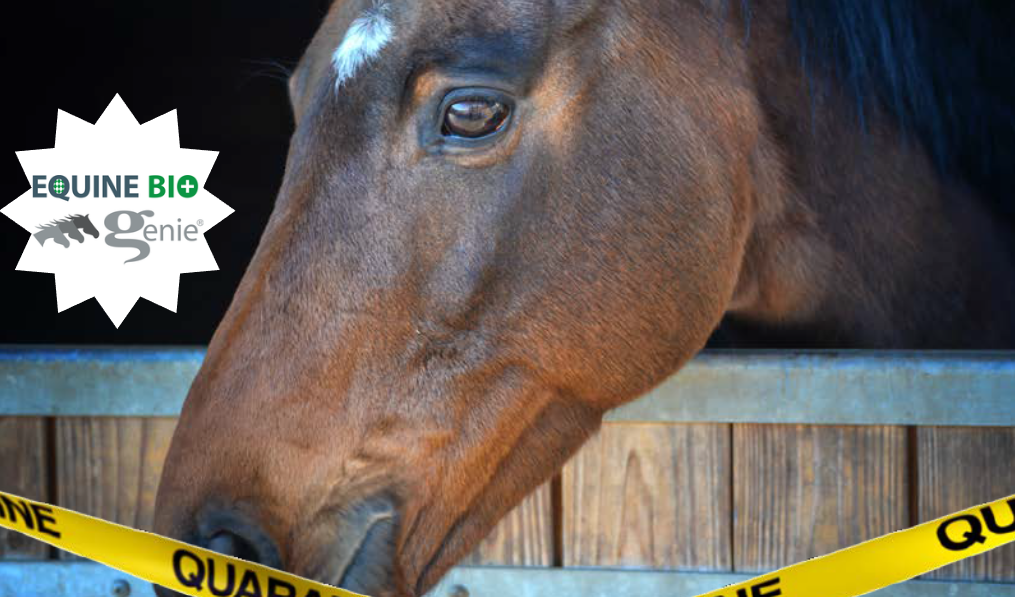
Is Your Disinfectant Safe?
The Stable Biosecurity webinar focused on maintaining the health of horses through good stable biosecurity practices.
From vaccinations to stable disinfectants and water treatments, the webinar covered everything you need to know to keep your horse and yard free from biosecurity risks.
Our panellist, Ben Tuckey of Equine BIO Genie, has given us some information on what to avoid in our equine disinfectants:
• Benzalkonium Chloride (BAC), part of the QUAT family (Quaternary Ammonium Compounds), is a common
active ingredient in many equine disinfectants. However, it is also listed among the top 10 ingredients most
harmful to animals. It carries the following hazard classifications:
o Acute Toxic (Oral) H302
o Skin Irritant H314
o Acute Aquatic Toxic H400
o Chronic Aquatic Toxic H410
• PHMB (Polyhexamethylene) is a common ingredient in many equine disinfectants. However, it has been
banned in human biocides for some time due to its detrimental health effects. It carries the following hazard
classifications:
o Carcinogenic Category 2 (H351)
o Specific Target Organ Toxicity (STOT) H372
o Acute Aquatic Toxic H400
o Acute Toxicity (Inhalation) H302
• Cyclopentasiloxane comes with a warning of PBT, which stands for 'Persistent Bioaccumulative Toxicity.' This
classification speaks for itself, highlighting the potential danger it poses. Clearly, this is something we don't
want around our horses or ourselves.
• Isopropanol and isopropyl alcohol have a very high evaporation rate and carry an Eye Irritant warning
(H319). Additionally, they are classified under Specific Target Organ Toxicity (STOT). A very common product
contains up to 10% of this ingredient.
• Some ingredients carry 'workplace control parameters,' including dipotassium peroxodisulphate. This
compound is found in powdered form disinfectants, which are mostly acid-based and extremely corrosive.
Ben goes on to say: "It is worth noting that to achieve superior efficacy in killing bacteria, viruses, fungi, and spores, we do not have to rely on such damaging products. By engaging in more advanced biocidal technology, such as
silver-stabilized H₂O₂, we can use products where the active ingredients degrade to water and oxygen after
application, leaving zero toxicity in the environment."
"We must be more vigilant and discerning in our choices. It is possible to use organic-compliant disinfectants that do
not carry the same warnings mentioned above, while also having clearly stated equine-specific testing and
credentials."
I'm sure you will join us in thanking Ben for letting us know what to look out for!
